
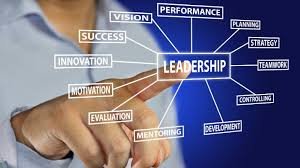
Leadership development is one of the most talked-about priorities in organizations today.
It is also one of the most poorly executed.
Many companies invest in workshops, retreats, and motivational sessions, yet months later, performance remains unchanged.
Why?
Because leadership development is often treated as an event instead of a system.
The Real Problem: Leadership Without Structure
Most organizations make three critical mistakes:
- They promote high performers without leadership training.
- They run one-off seminars with no accountability.
- They fail to measure the impact of leadership on performance.
Leadership is not a title.
It is a measurable influence on outcomes.
Without structure, training becomes inspiration, not transformation.
Why Traditional Leadership Programs Fail
1. No Alignment With Business Goals
If leadership training is not directly tied to revenue, productivity, or cultural metrics, it becomes theoretical.
2. No Practical Application
Leaders need real-world scenarios, feedback loops, and coaching, not just slides and theory.
3. No Follow-Up System
Behavior change requires reinforcement. Without evaluation and accountability, old habits return.
What Effective Leadership Development Looks Like
Successful organizations treat leadership as a pipeline, not a position.
That means:
- Clear competency frameworks
- Defined leadership expectations
- Continuous coaching
- Performance-linked development goals
- Data-driven evaluation
Leadership must be embedded into the culture, not outsourced to occasional training sessions.
The Competitive Advantage of Structured Leadership
Organizations with strong leadership systems experience:
- Higher employee engagement
- Reduced turnover
- Faster decision-making
- Stronger accountability
- Sustainable performance growth
In today’s competitive environment, leadership is not optional infrastructure; it is a core strategy.
If leadership development does not change behavior, it is not development.
The question every organization must ask is simple:
Are we training leaders, or building a leadership system?
The difference determines long-term success.